Table of Contents
ToggleGates We've Built Across Central Texas
This automatic gate gallery in Austin, TX shows entrances we built and automated ourselves, photographed on the property after commissioning. No stock images, no renderings, and no manufacturer catalog shots standing in for real work.
If one of them looks like what you want, tell us about your entrance or call (512) 236-5178.
What to look at
It’s worth knowing what separates a good gate from a photogenic one, because photographs flatter both.
How the panel meets its catch. On a double gate, the leaves should meet evenly, with a consistent gap top to bottom. A gap wider at the top means the hinge post has moved or the panel has dropped. You can see that in a photograph if you look for it.
The posts. Look at their size relative to the panel they carry. Most gate problems start here, and the posts under a cheap quote usually save money.
Where the operator sits. It should be reachable for service, clear of where vehicles swing, and not an afterthought bolted somewhere convenient.
The ground. Look at what the drive does as it leaves the opening. Rising ground, a curve, or a short run to the road all shape what could be built there, and the approach usually explains why a particular gate went in.
The gates
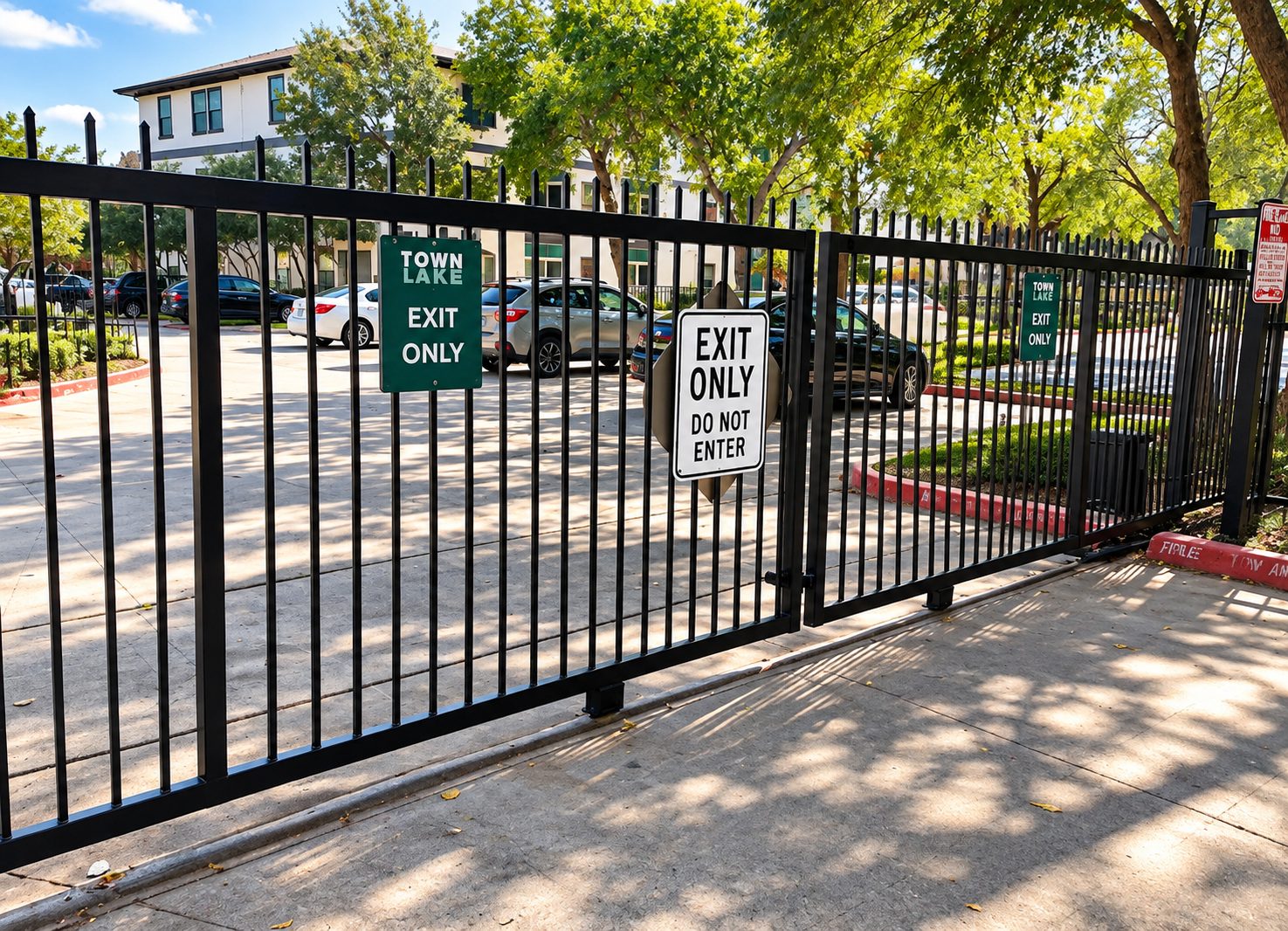
Commercial cantilever slide, steel picket. A controlled exit on a working site, with the counterbalance carrying the panel clear of the drive.
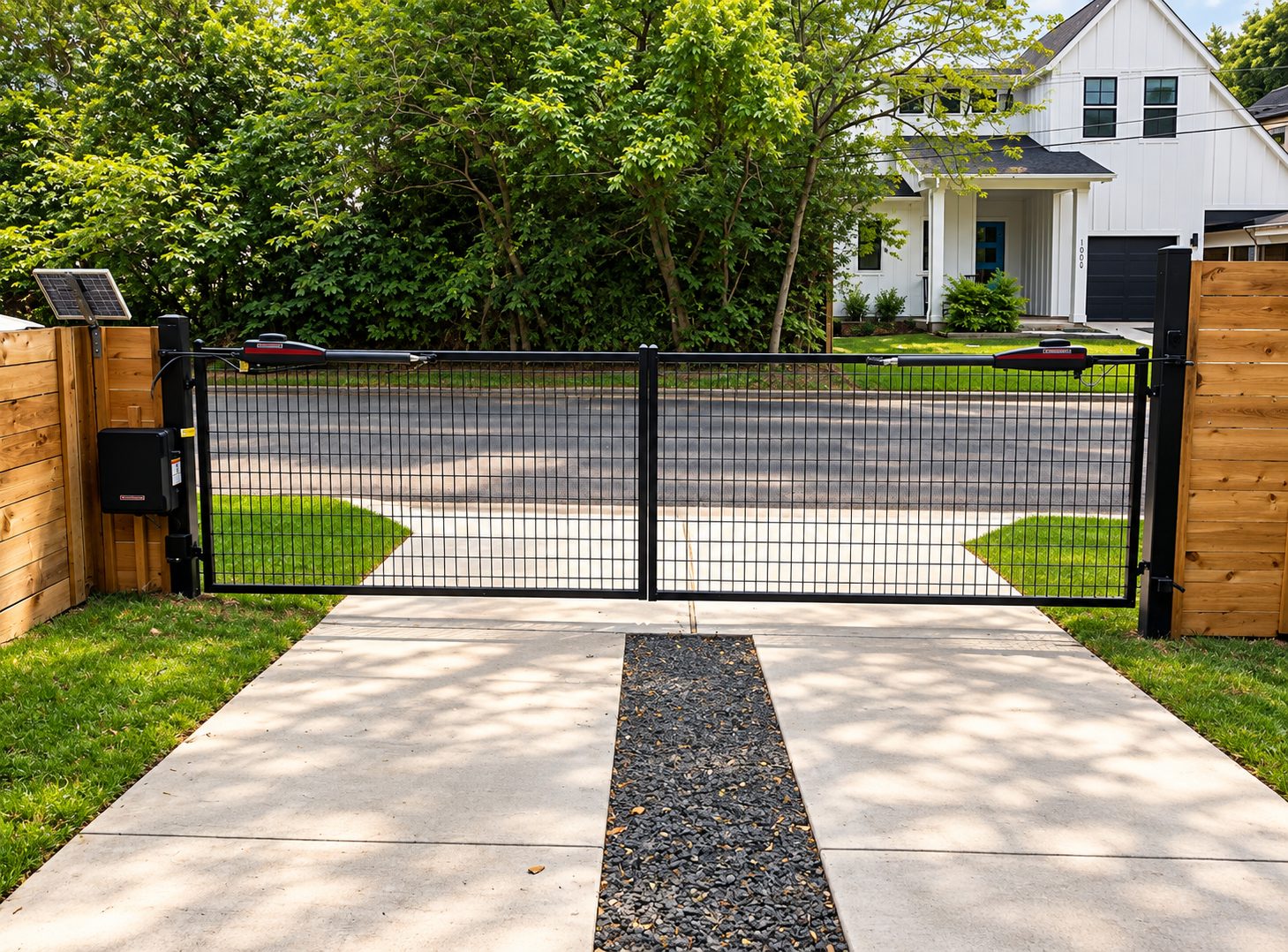
Double swing, steel frame with mesh infill. Two leaves halve the span each hinge post carries on a short suburban drive.
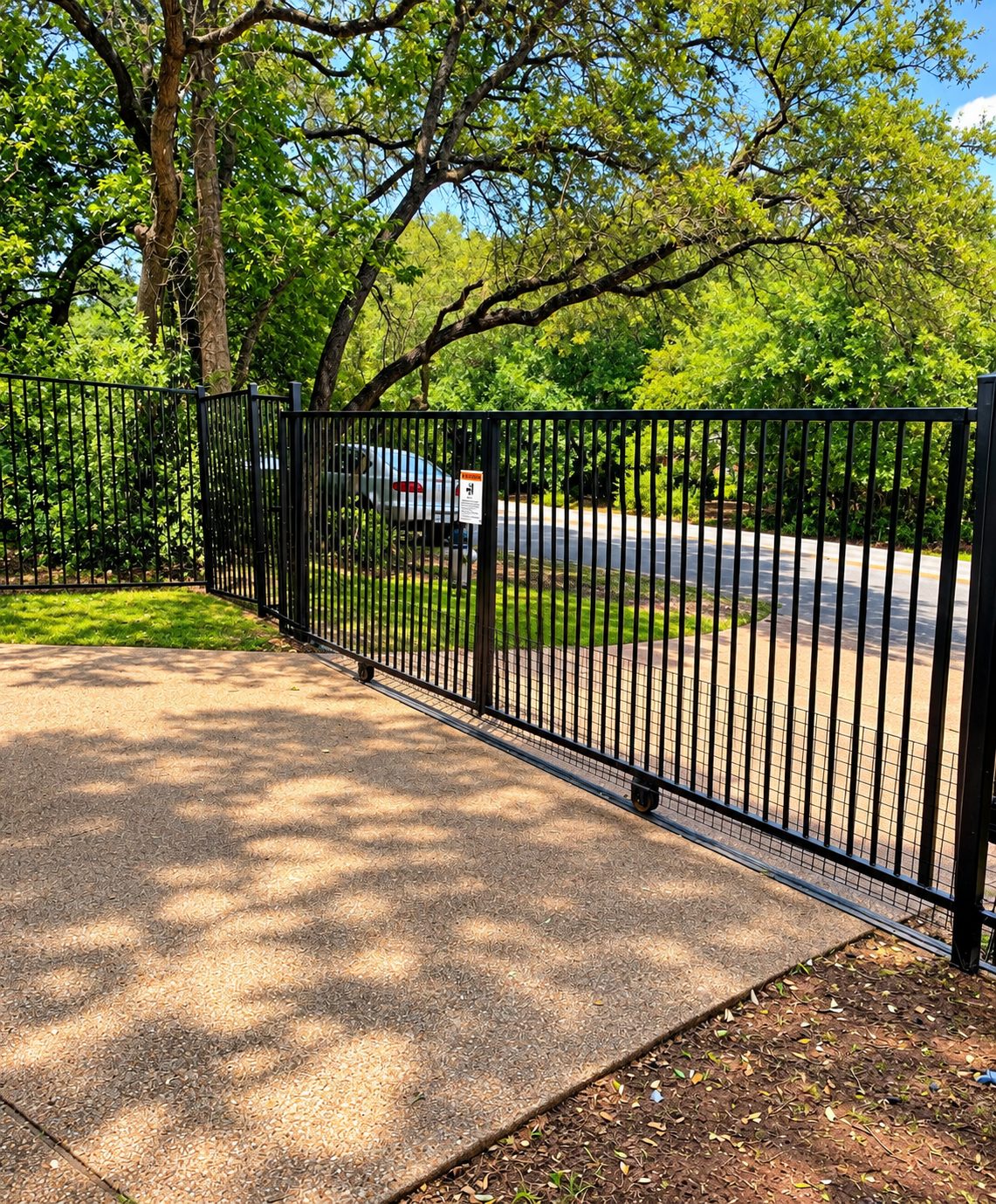
Slide gate, steel picket. A long approach under oaks, where a swing panel had nowhere clear to arc into.
Slide gate on a slope, picket over a solid base. The ground falling away from the opening rules out a swing panel, and the stone columns carry structural posts inside. How a slide system’s operation explains the mechanism.
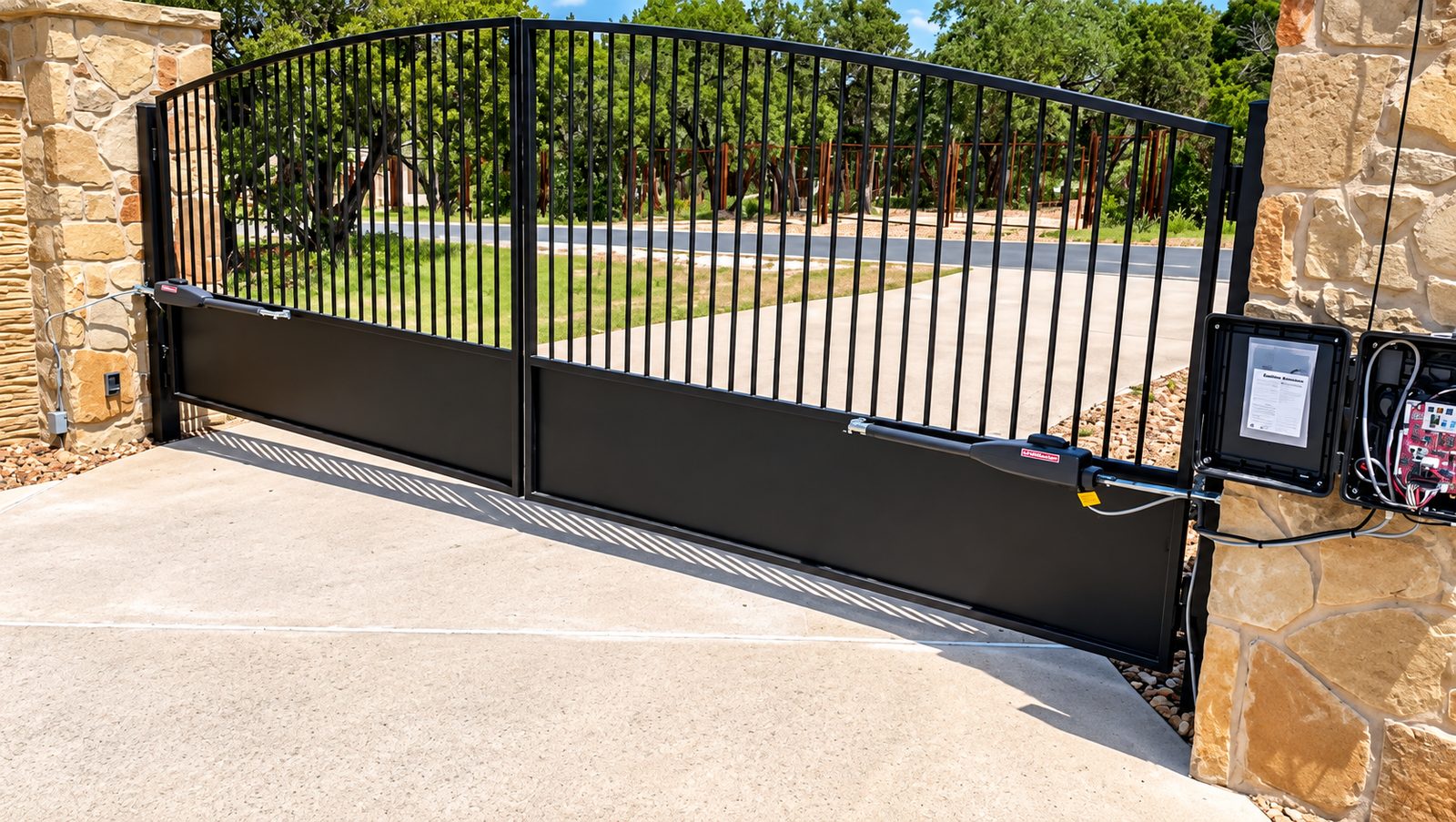
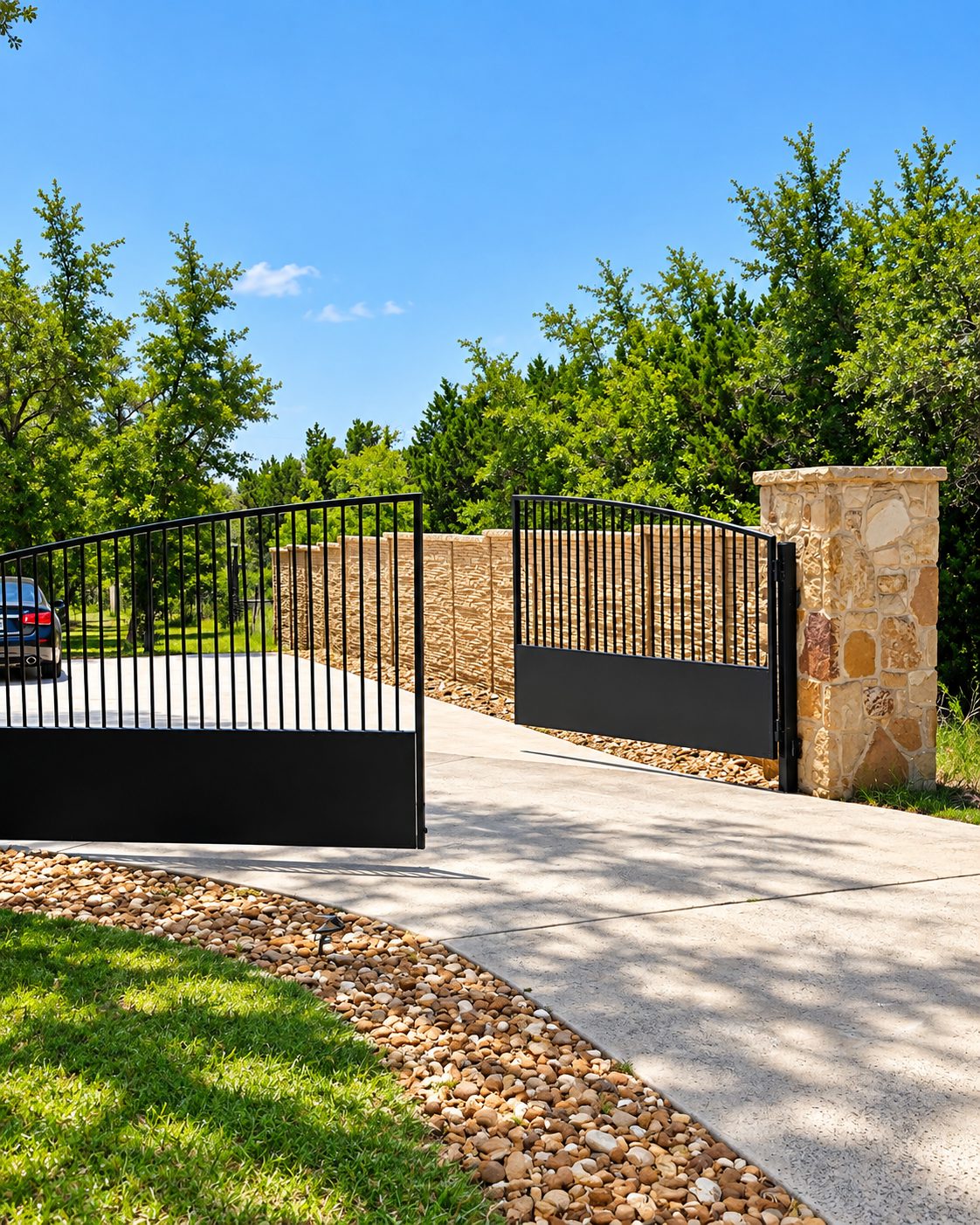
Arched double swing between stone columns. Keypad set at driver height on the column, reachable without opening the car door.
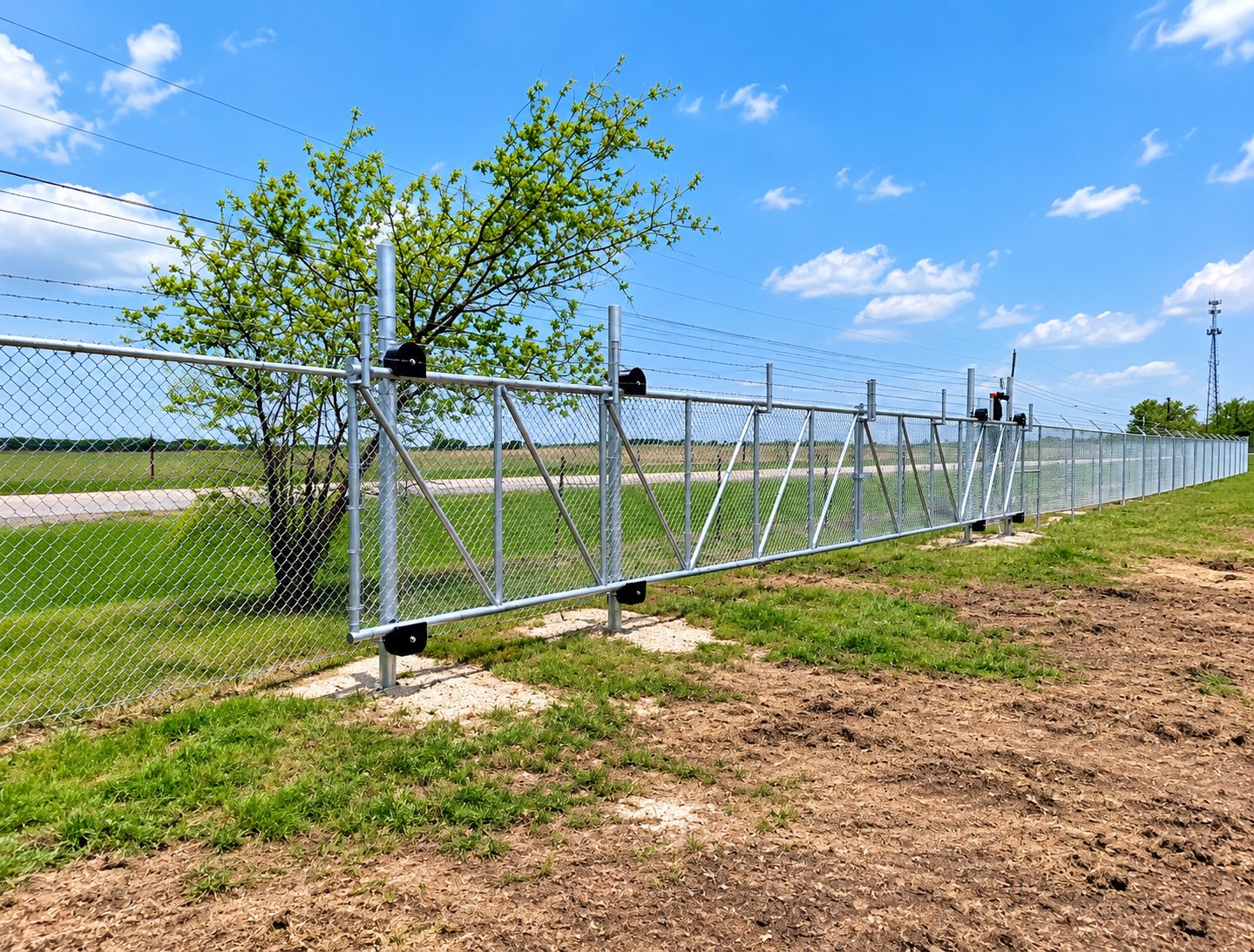
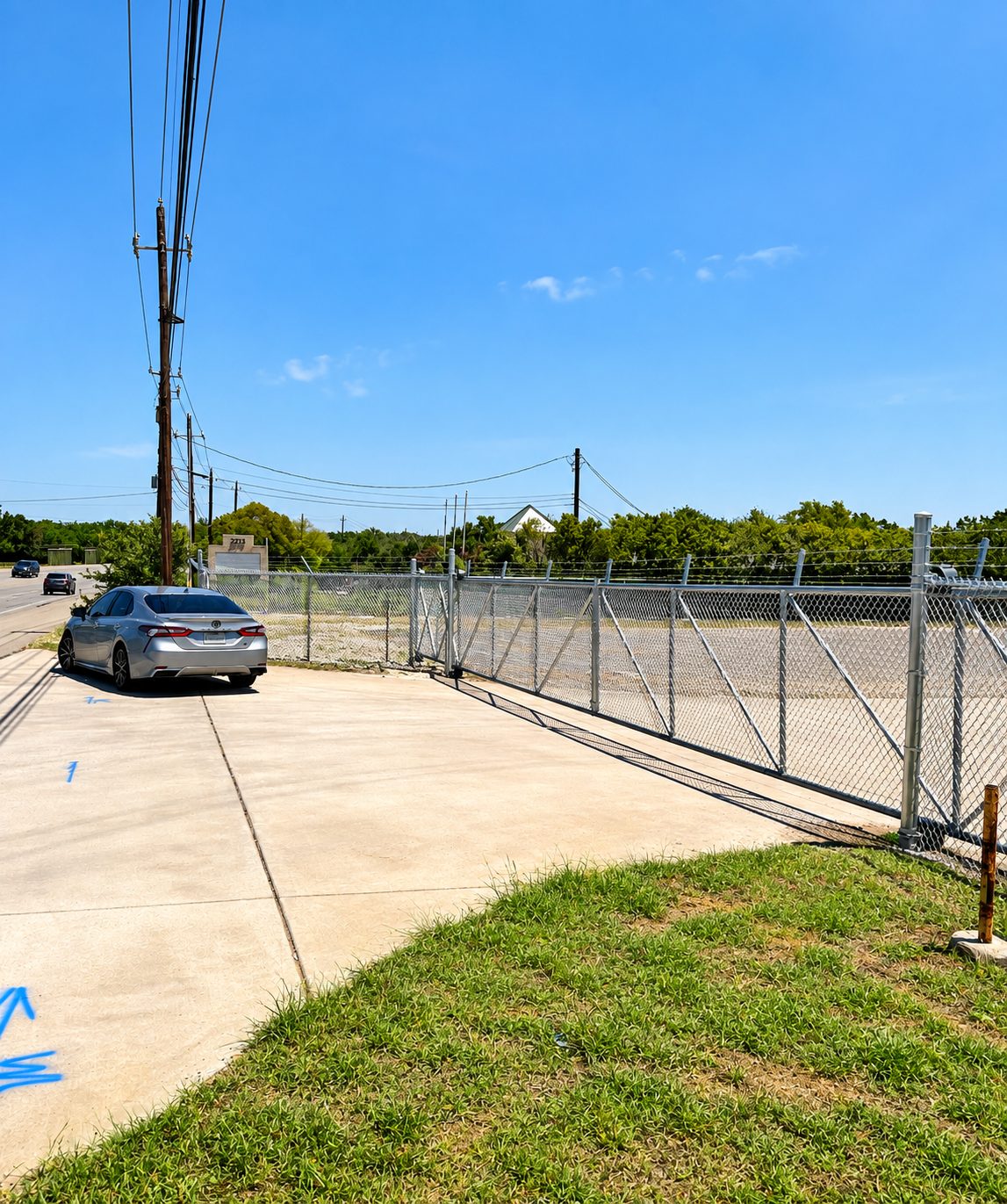
Chain-link cantilever on open ground. The operator sits at the post, and the counterbalance tail runs back along the line, so nothing crosses the drive.
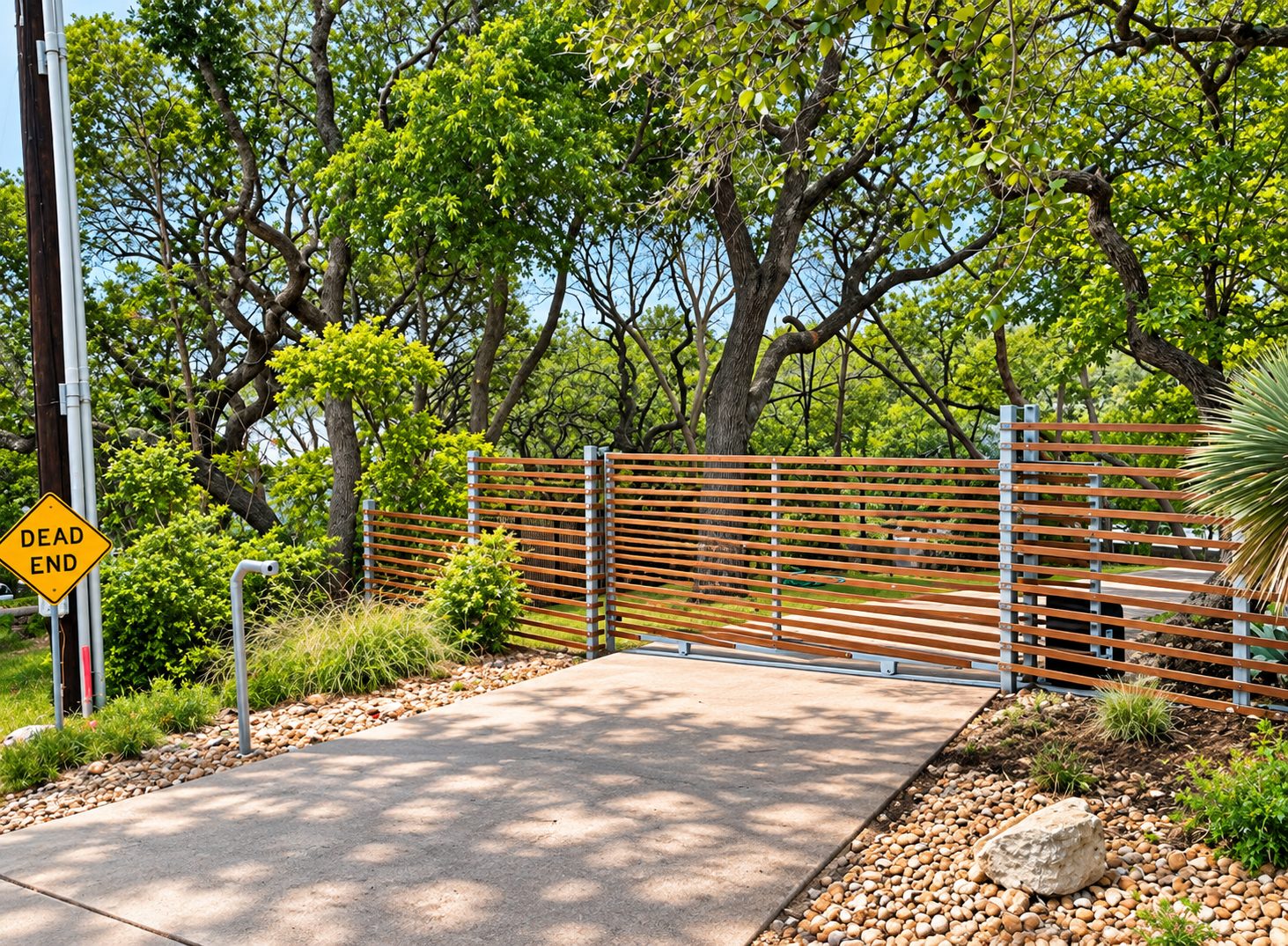
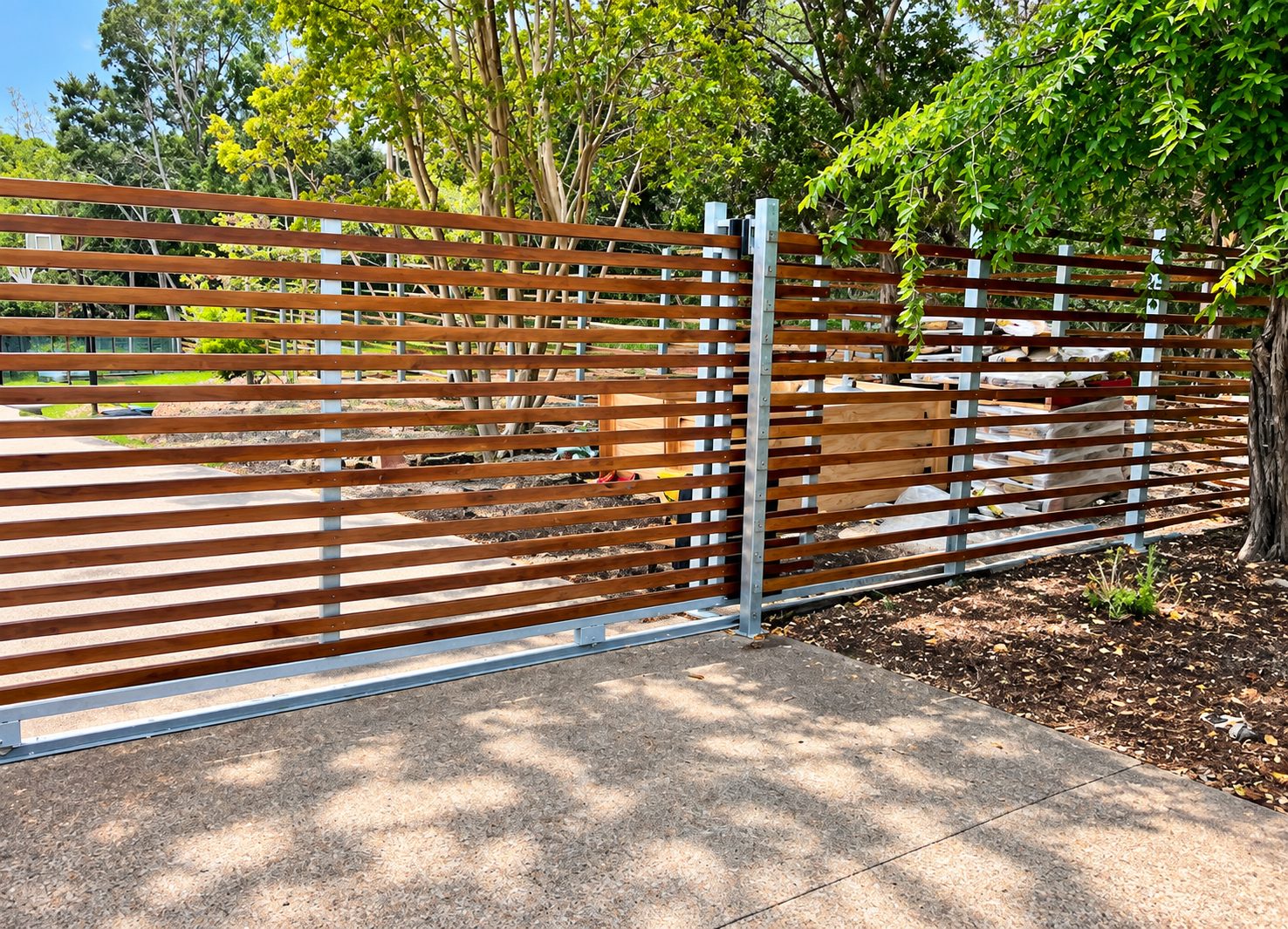
Horizontal slat slide, galvanized frame. Slat spacing screens the property at eye level while still letting wind through the panel.
Slat slide on a narrow entrance. A tight opening close to the road, where a swing gate would have swept into the carriageway.
Commercial cantilever across a wide opening. The counterbalance section behind the posts is what holds a span this long clear of the ground.
What these projects have in common
The entrances here vary widely. That’s the point. They’re spread across the metro, from Round Rock entrances in the north to Buda replacement work in the south, and the ground alone changes what was possible from one to the next.
Most are steel, some are ornamental iron, and a few put timber over a steel frame. Some swing, some slide, and a few are cantilever systems on properties where nothing could cross the drive. Several sit in HOA communities where the design was approved before anything was welded.
They share that one crew fabricated the panel and handled the automation, which is how we have worked since 2013. That’s why the operator suits the gate in each case, rather than someone choosing it without seeing it.
Can we build yours
Almost certainly, because we build to the opening rather than from a catalog.
If you’ve seen something here you like, the useful next step is working out whether your property can take it. The types available set out what each configuration needs, and choosing a residential gate design covers the appearance side.
From there, it’s a visit. Building one from scratch covers how a project runs, and if a gate has reached the end, swapping it out is a different conversation with different economics.
Ace Automated Gates | Austin works out of 1821 Heatherglen Ln, Austin, TX 78758. We’ve been building gates across Central Texas since 2013; we’re fully insured, and everything carries a one-year craftsmanship warranty. Call (512) 236-5178 and tell us what you’d like.
Frequently Asked Questions
Are these your own projects?
Yes, every one of them. We fabricated each gate in our own shop, installed and automated it with our crew, and photographed it on the property after commissioning. We don’t use stock photography, renderings, or manufacturer catalog images, because the whole point of a gallery is showing you work you can actually judge.
Can you build a gate like one in the gallery?
Usually, we fabricate to your opening rather than ordering a standard panel. What changes between properties is what the entrance allows: the clear opening, the room to swing or slide, the slope, and the ground under the posts. Those decide whether a particular design transfers directly or needs adapting.
Why do the gates here look so different from each other?
Because the ground does. An entrance on expansive clay east of the interstate gets a different foundation from one cut into limestone out west, and a short drive off a busy road rules out designs that a long approach allows. What each type needs explains why one property’s answer rarely transfers to another.
How long does a gate like this take to build?
Groundwork sets the pace, not fabrication. Footings must cure properly before anything is hung on them, so most driveway projects take more than a single visit. Long approaches that need a trench for power take longer, and when HOA approval is required, that stage often adds the most.