
Table of Contents
ToggleGate Replacement in Austin, and When It Beats Another Repair
Automatic gate replacement in Texas is rarely something people plan for. It happens after the third repair bill, when the pattern becomes obvious, and somebody finally asks whether any of this is money well spent.
That’s the question this page is about. If you’re at that point, book an assessment visit, and we’ll tell you which side of the line your gate sits on, or read what drives the price first. Call (512) 236-5178.
Submit this form to request quote
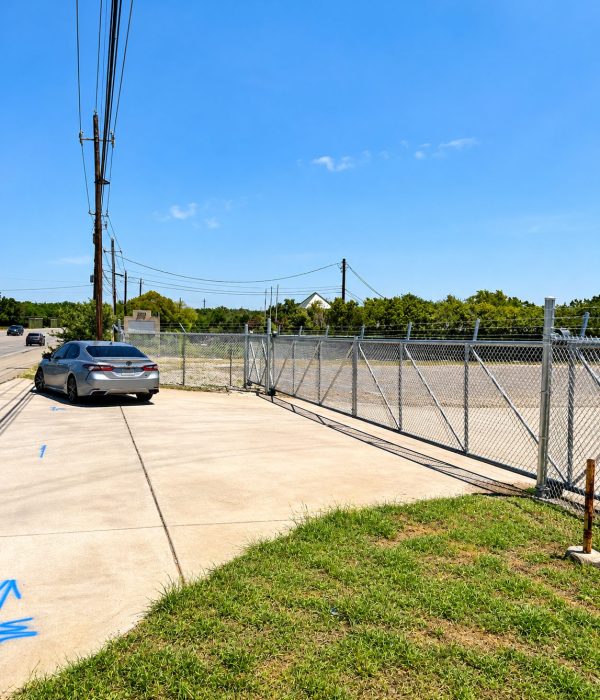
When replacement beats repair
There’s a reasonably clear line, and it isn’t about age.
An operator with a control board and gearbox replacement is a machine you have already bought twice. The next failure isn’t bad luck; it’s the pattern completing. Same with a panel rewelded at the same joint more than once: the weld isn’t the problem; the load path is.
A hinge post that has moved twice is a foundation problem wearing a gate’s clothing. You can straighten the panel as many times as you like and the ground will keep doing what it does.
Below that line, repair rather than replacement is usually the honest answer, and we’d rather do the smaller job and be asked back for the bigger one later. Above it, another repair just moves the same expense a few months down the calendar.
The other trigger has nothing to do with failure. Gates get replaced because the property changed around them: heavier traffic than the gate was specified for, a wider vehicle that no longer fits, or a panel that was never built for the wind at that entrance.
What waiting actually costs
Gates rarely fail gracefully. They fail stuck open, a security problem, or stuck shut, an access problem, and both arrive at the least convenient moment.
The predictable version of this job is cheaper than the emergency version. When a replacement is planned, we can fabricate the panel in the shop, schedule the changeover, and have the property secured throughout. When the gate fails first, everything happens out of order and usually costs more.
There’s also the compounding problem. A gate that binds or drags puts load on the operator every cycle, so an unresolved mechanical fault quietly consumes the hardware. Owners often replace an operator, then replace it again eighteen months later, and only then discover the gate was never the operator’s problem. Operator ratings cover what that hardware is actually rated for.
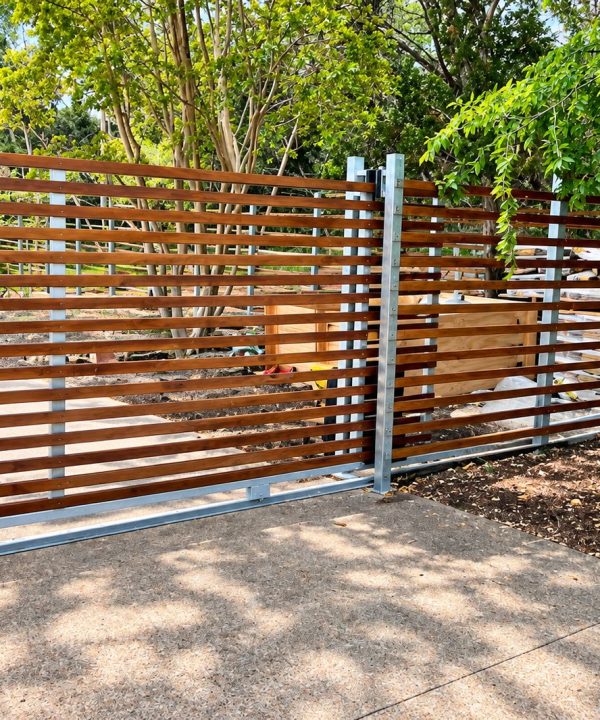
What carries over
This is the part worth settling before anyone quotes, because it moves the number more than the gate design does.
Hinge posts and columns are the big variable. If sized properly and left undisturbed, they may well carry a new panel. If they were undersized originally, reusing them just transfers the old mistake into the new gate. We check plumb, depth where we can establish it, and what the ground has done since.
Conduit and the power run usually survive. The slab usually does too, in most cases. Entry hardware you already own generally carries over if the wiring did, though a system with more users than it was set up for is worth revisiting while the entrance is open anyway.
The operator depends entirely on the new panel. If the replacement is heavier, wider, or configured differently, the old unit isn’t suitable, regardless of its condition. If the panel is comparable and the unit hasn’t been rebuilt, keeping it is reasonable.
How the changeover runs
We fabricate first and remove second. We weld the panel in steel or iron to the existing opening, so the property keeps its gate until the new one goes on.
Where the foundation is sound, a changeover is usually a single visit. If posts need to be reset, footings must cure before anything is hung on them, and we’ll agree how the entrance is secured in between rather than leaving you to figure it out. Our new-gate process covers the full sequence when the groundwork is starting over.
We do both halves of the job, so we can specify the panel and the machine that moves it against each other. On a replacement, that matters more than on a new build, because the failure you’re replacing was often caused by that not happening the first time.
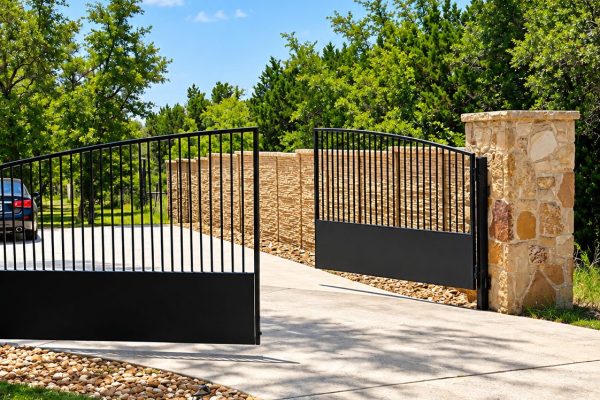
Homes, businesses, and remote entrances
Home gate replacement is usually driven by wear, appearance, or a changed HOA requirement. Commercial entrance replacement is almost always driven by duty cycle, meaning a gate was specified for lighter traffic than it ended up carrying.
On acreage, replacement often coincides with rethinking power. If trenching was avoided years ago and the system has been marginal since, solar systems on remote drives can be sized properly this time rather than inherited. It’s also a good time to revisit configurations worth considering, since swapping a swing for a slide is much easier while the opening is already being worked on.
Working with us
Ace Automated Gates | Austin handles replacements from 1821 Heatherglen Ln, Austin, TX 78758, across the metro and the surrounding cities.
We’ve been doing this here since 2013. Everything carries a one-year craftsmanship warranty; we’re fully insured, and when a job needs a new circuit or panel work, we bring in a licensed electrician rather than improvising. We hold no dealership with any manufacturer, so a recommendation to replace is a recommendation rather than a sale.
You can see completed replacements in the gallery, and the rest of our work sets out everything else we handle.
Call (512) 236-5178 and tell us what’s been repaired already.
Frequently Asked Questions
What is the tipping point for replacing rather than repairing?
Count what has already been done to it. An operator with both a control board and a gearbox replaced is a machine you have bought twice, and the next failure completes the pattern rather than interrupting it. The same applies to a panel rewelded at the same joint more than once.
Is it cheaper to replace before the gate fails?
Usually, and by a meaningful margin. A planned changeover lets us fabricate in the shop, schedule the work, and keep the property secure throughout. An emergency replacement happens out of order, on short notice, and almost always costs more than the same job booked three weeks earlier.
Will the property be left open during the work?
Not on a planned job. We fabricate the new panel before removing the old one, so the changeover is usually a single visit, with the entrance secured at the end. Where posts have to be reset, and footings need curing time, we agree how the opening is protected in between.
My gate works but no longer suits the property. Is that worth replacing?
Often, yes, and nothing needs to have actually failed for it to make sense. Heavier traffic than the original spec allowed for, a wider vehicle that no longer fits through, or a panel never built for the wind at that entrance are all legitimate reasons. Waiting for a breakdown just means doing the same work under worse conditions.
Can the new gate be a different type from the old one?
Yes, and a replacement is the natural moment to change it. Swapping a swing panel for a slide system is much easier while the opening is already being worked on than as a standalone project later, especially if the original choice never really suited the drive’s shape in the first place.
Does replacing the gate mean replacing the access system?
Not necessarily, and often not. The access system usually carries over well if the wiring survives, though a system carrying more users than it was originally set up for is worth revisiting while the entrance is already open. That is a decision worth making deliberately rather than arriving at by default.
How do you decide what the new gate should be?
The same way we would on a fresh build: the opening, the slope, the room to move, the power distance, and how often the thing will be used. The difference is that some of those answers already exist on site, which usually narrows the design faster than starting from nothing.